
Electrician jobs in Romania 2026 are rising due to infrastructure growth.
Electrician jobs in Romania as of May 2026 sit at the intersection of two powerful labour market forces: sustained infrastructure expansion and a widening technical skills gap. While broader employment data from the Romanian National Employment Agency (ANOFM) shows more than 35,000 total vacancies across the country in May 2026, electrician roles remain one of the most consistently in-demand technical occupations within the construction and industrial maintenance ecosystem.
What makes electrician work particularly important in Romania’s current labour cycle is not just the volume of available jobs, but the structural nature of demand. These roles are not driven by short-term hiring spikes. Instead, they are tied to long-term infrastructure development, industrial automation, housing expansion, and EU-funded modernization projects. This creates a stable but persistently undersupplied labour category.
Understanding electrician employment in Romania in 2026 requires looking at three interconnected dimensions: why demand is rising, what employers actually require, and how salaries reflect both opportunity and constraint within the broader labour market.

Electrician demand in Romania is primarily anchored in construction and industrial development activity. Within the broader construction sector, which accounts for more than 8,394 vacancies according to ANOFM May 2026 data, electrical installation and maintenance roles represent a critical subset of technical labour.
Romania’s ongoing infrastructure expansion is one of the main drivers of this demand. Large-scale motorway projects, residential construction growth, and industrial facility development have significantly increased the need for certified electricians capable of handling both basic and advanced electrical systems. These include building wiring, industrial installations, power distribution systems, and increasingly complex smart infrastructure integrations.
At the same time, Romania’s integration into European supply chains continues to expand industrial demand. Manufacturing facilities, logistics hubs, and warehousing systems require continuous electrical maintenance and upgrades. As automation increases across industrial environments, the need for electricians with experience in control systems and machine wiring has also grown.
This demand is not isolated to urban centres. While Bucharest, Cluj-Napoca, and Timișoara remain core hiring regions, secondary cities and industrial corridors are increasingly absorbing electrical labour demand due to decentralised infrastructure development.
European labour mobility patterns reinforce this pressure. Research from European Employment Services (EURES) shows continued cross-border movement of skilled technical workers from Eastern Europe to Western Europe, particularly in construction-related trades. This outflow reduces domestic supply and intensifies local shortages.
The result is a labour market where demand is not only high, but also structurally sustained across multiple economic cycles.
Despite strong demand, electrician vacancies in Romania remain consistently open. The core reason is not a lack of interest in the profession, but a mismatch between employer requirements and available workforce qualifications.
Modern electrician roles in Romania require a combination of formal certification, practical experience, and safety compliance training. Employers increasingly expect candidates to hold recognised vocational qualifications and demonstrate hands-on experience in installation, maintenance, or industrial systems work.
Safety requirements have also become significantly stricter. Compliance with EU-aligned workplace safety standards, including those outlined by the European Agency for Safety and Health at Work , has elevated the baseline expectations for electrical work. This includes training in hazard prevention, system isolation procedures, and regulated installation practices.
However, a significant portion of job applicants do not meet these combined requirements. While Romania produces technically capable workers, the alignment between vocational training systems and labour market needs remains incomplete. This results in a consistent gap between job availability and qualified supply.
In many cases, employers report receiving large volumes of applications but only a small percentage of candidates meeting minimum technical criteria. This is one of the key reasons why electrician roles remain among the most difficult skilled positions to fill, even in a high-vacancy environment.
Electrician salaries in Romania reflect both the technical complexity of the role and the persistent shortage of qualified workers. In 2026, average net monthly earnings for electricians typically range from approximately 3,500 RON to 6,000 RON depending on experience, certification level, and sector specialization.
Entry-level electricians or those working under supervision in residential construction projects tend to fall at the lower end of this range. However, experienced electricians working in industrial environments, infrastructure projects, or specialised systems installations can earn significantly more, particularly when overtime, project bonuses, and emergency maintenance work are included.
Industrial electricians often command higher compensation due to the complexity of systems involved. These roles may include working on automated machinery, high-voltage systems, and integrated control networks within manufacturing or logistics facilities.
Despite steady nominal wage growth, real wage pressure remains a factor. According to broader labour market data from the National Institute of Statistics (INS Romania), Romania continues to experience moderate wage increases of approximately 4 to 5 percent annually. However, inflationary pressure and regional wage differentials across the European Union limit the competitiveness of domestic salaries.
This wage gap contributes to ongoing migration trends, where skilled electricians move to Western European markets where compensation levels are significantly higher. This external demand further tightens domestic supply.
The skill profile required for electrician roles in Romania in 2026 is more complex than in previous labour cycles. Employers are no longer hiring purely based on manual ability. Instead, they require a combination of certification, technical knowledge, and systems awareness.
Formal vocational education remains the baseline requirement. Candidates are typically expected to have completed accredited training programs in electrical installation or industrial maintenance. In addition, practical experience of two to three years is commonly required for mid-level positions.
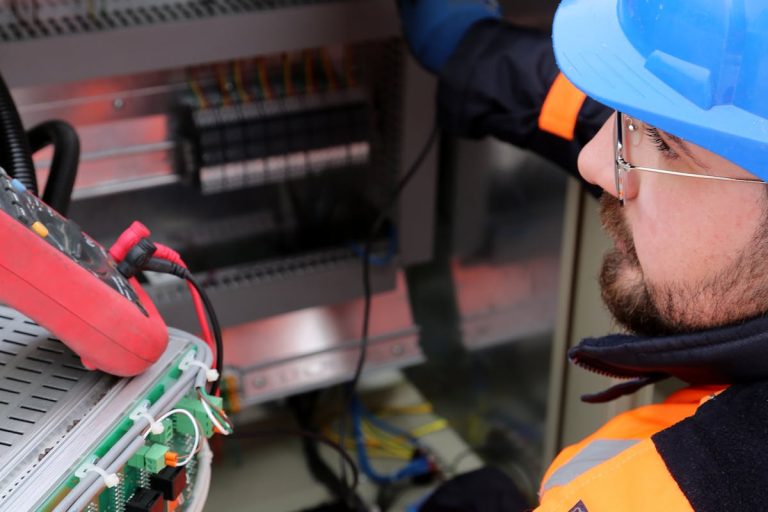
Technical skills vary depending on specialization. Residential electricians focus on building wiring, circuit installation, and maintenance of electrical systems in housing and commercial buildings. Industrial electricians require deeper knowledge of machinery systems, control panels, automation interfaces, and electrical diagnostics.
Digital literacy is becoming increasingly relevant. As electrical systems become more integrated with automated monitoring and smart infrastructure, electricians are expected to understand basic diagnostic tools, digital schematics, and system monitoring software.
Safety compliance remains a critical requirement across all roles. Employers expect workers to be trained in hazard prevention, system isolation, and regulated installation procedures, particularly in high-risk environments such as industrial plants or infrastructure projects.
The combination of these requirements contributes to a structural skills gap. While Romania has a large labour pool, only a portion of candidates meet the full spectrum of technical and compliance expectations required for modern electrician roles.
Electrician jobs in Romania are influenced by broader labour market dynamics that extend beyond the construction sector. One of the most important factors is labour mobility within the European Union.
Skilled Romanian electricians continue to migrate to Western Europe, where wage levels are significantly higher. This trend is consistent with broader EU labour mobility patterns documented by OECD employment research, which highlights persistent East-to-West labour flows in technical occupations.
This migration creates a continuous cycle of domestic shortages. As experienced workers leave, new entrants enter the labour market but often require additional training to reach full productivity levels. This creates a lag between labour supply and labour demand.
At the same time, Romania’s domestic infrastructure expansion continues to generate new demand faster than workforce replacement can occur. This imbalance is particularly visible in regions undergoing rapid industrial development or large-scale construction investment.
The result is a labour market where electrician roles remain structurally undersupplied despite high levels of overall employment activity.
The outlook for electrician employment in Romania through 2026 and beyond remains strongly positive in terms of demand. Infrastructure expansion, industrial modernization, and continued EU funding cycles are expected to sustain long-term hiring needs.
However, the structure of demand is likely to evolve. Increasing adoption of automation systems, smart infrastructure, and digital monitoring tools will gradually shift electrician roles toward more technically advanced functions.
Rather than reducing demand, this shift will increase the complexity of required skills. Electricians will increasingly be expected to operate within hybrid environments that combine physical installation work with digital diagnostics and system integration.
Unless vocational training systems expand and adapt to these changes, the skills gap is likely to persist or widen over time.