
Explore Romania, Poland, Czechia and Bulgaria, and see what European labour data says about manufacturing skills.
Production workers in Europe are not simply sitting in one country waiting for employers to find them. The latest European labour-market data points to something more complicated: some countries have shortages in manufacturing-related occupations, while others have available workers with relevant skills. The opportunity for employers is increasingly about knowing where the imbalance sits and being willing to recruit across borders.
That matters because Europe’s manufacturing workforce is under pressure from several directions at once. Companies are dealing with an ageing workforce, changing production technologies, tighter labour markets and competition for workers who can operate machinery, assemble products, maintain equipment and work in increasingly automated environments. The European Labour Authority’s 2025 analysis found that shortages are particularly common among trades and machine operators, including many medium-skilled occupations.
For an employer trying to build a production team, the question therefore shouldn’t simply be, “Which country has the cheapest labour?” A better starting point is, “Where can we find the combination of availability, relevant skills, mobility and working conditions that our production operation requires?”
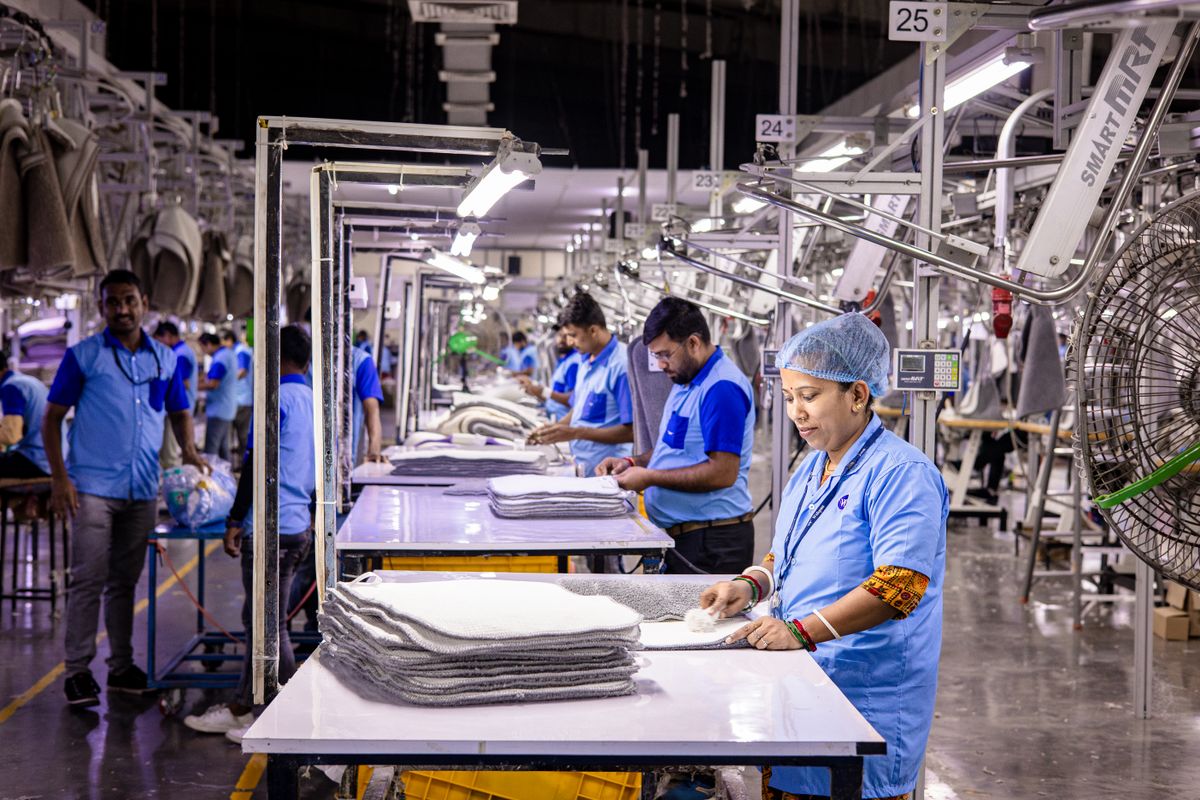
The most useful finding from the latest EURES data is the mismatch between countries.
The European Labour Authority identified 2,617 shortage instances across occupations in 2025, while 2,177 surplus instances were also recorded. Shortages were particularly common among professionals, trades and machine operators. In other words, Europe has workers and Europe has jobs, but the two do not always sit in the same place.
The mismatch is even more revealing when you look at occupations rather than countries. EURES reports that 98% of occupations experiencing a shortage in at least one country are simultaneously experiencing a surplus in another country. That does not mean an employer can simply move workers from one country to another overnight. Language, qualifications, wages, housing and mobility all create barriers. But it does show that cross-border recruitment can solve problems that a purely domestic search cannot.
This is particularly relevant to production because many manufacturing roles are occupation-specific rather than dependent on a university degree. An employer may need someone who can operate a CNC machine, assemble mechanical components, work on a production line or carry out industrial maintenance. Those skills can be valuable across several European manufacturing markets.
Romania is particularly interesting because its labour market contains both significant recruitment demand and specific areas where workers are available.
EURES identifies mechanical machinery assemblers and metal-working machine tool setters and operators among Romania’s shortage occupations. It also lists building construction labourers, plumbers, concrete workers and other practical occupations where employers face shortages.
At the same time, EURES identifies manufacturing labourers among Romania’s surplus occupations. That sounds contradictory until you look at the level of skill involved.
A company that needs general production labour may find a different candidate market from a company looking for an experienced machine operator. The broader labour pool may contain available workers, while a more specific manufacturing skill remains difficult to find.
That distinction is important for employers considering Romania as a production recruitment market. The country should not be treated as a single pool of “factory workers.” The availability of candidates depends heavily on the exact occupation, region and level of technical experience.
Central Europe remains important because of its established manufacturing infrastructure and proximity to major industrial markets.
Poland has a large industrial workforce and a substantial manufacturing base, while Czechia has long been integrated into European automotive and industrial supply chains. For employers, the attraction is not simply the number of people available. It is the existing concentration of workers accustomed to manufacturing environments.
But employers should not assume that established manufacturing economies automatically have spare production workers.
The broader European data shows why. Labour shortages are increasingly structural, and machine operators and trades are among the occupational groups where shortages appear frequently.
A country can have a large manufacturing workforce and still have difficulty producing another thousand people with the exact skills a growing factory requires.
Bulgaria also deserves attention when employers are looking beyond the usual Western European recruitment markets.
The European Labour Authority’s 2025 analysis identifies Bulgaria among the countries where employers report shortages across a wide range of occupations.
That does not make Bulgaria a guaranteed source of production workers. In fact, the shortage data should make employers more careful about assuming that moving the search east automatically solves a labour problem.
The useful opportunity is to look at specific occupations and regions, rather than treating an entire country as a labour reservoir.
For production recruitment, that means asking whether the local market contains the machine operators, assemblers, welders, maintenance workers or other technical profiles required by the particular factory.
Italy and the Netherlands are both examples of countries where employers face substantial labour shortages, although their economies and industrial structures are very different.
The 2025 EURES findings specifically point to countries including Bulgaria, Italy and the Netherlands as places where employers report difficulties filling a wide range of positions, including skilled trades such as welders.
For a manufacturer, that has an important implication.
Relocating a production operation to another European country does not automatically remove recruitment pressure. A company may move closer to customers, suppliers or infrastructure and still discover that the local labour market cannot provide enough people with the required production skills.
Recruitment needs to be considered alongside the location decision, not after it.
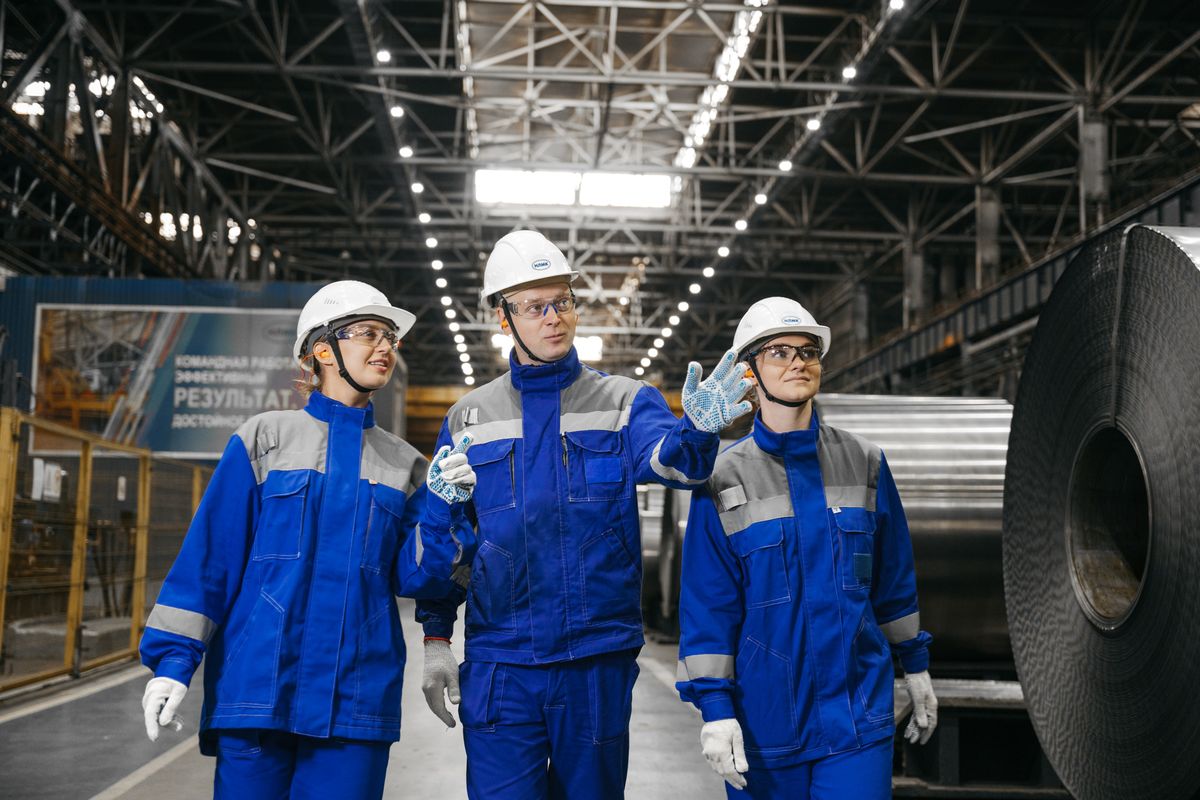
There is no single European country that is “best” for production workers.
A food manufacturer may need a different workforce from an automotive supplier. A metal-processing plant may need CNC operators and welders, while an electronics operation may need assembly workers with experience in precision manufacturing.
The distinction becomes even more important as factories automate.
A modern production worker may need to operate digital machinery, interpret technical instructions, monitor quality systems or work alongside automated equipment. The job may still be classified as a production occupation, but the skills required are very different from those of a traditional manual assembly role.
That is one reason the ELA describes many current shortages as being linked to medium-level, occupation-specific skills.
This may be the biggest change employers need to make.
A production recruitment brief that says “we need 50 factory workers” gives a recruiter very little to work with.
A better brief identifies the actual skills required: CNC operation, MIG/MAG welding, mechanical assembly, industrial maintenance, quality control, machine setup, electrical systems or whatever the production environment genuinely requires.
That makes cross-border recruitment much more practical because the employer can compare skill availability rather than simply comparing unemployment rates.
European employment services are increasingly moving in this direction themselves. EURES has highlighted skills-based recruitment as one way employers can widen their candidate pools, particularly in manufacturing, logistics, hospitality and other sectors experiencing labour shortages.
For employers, this can mean considering people who do not have the exact job title previously used in the recruitment brief but have the underlying skills required to perform the work.
Cross-border recruitment sounds straightforward until an actual worker has to move.
Housing can be a problem. So can transport, language, family circumstances and recognition of qualifications. Wage differences can also make an apparently attractive opportunity less appealing once the candidate considers the full cost of relocating.
The EURES research explicitly identifies these barriers, including limited awareness of opportunities abroad, qualification recognition, language and differences in wages.
That means an employer recruiting production workers internationally has to sell more than the job.
Location, accommodation support, transport arrangements, shift patterns, salary and onboarding can all influence whether a candidate is willing to move.
The companies that understand this will have a much larger potential labour market than companies that simply advertise a vacancy abroad and wait.
Romania already has a significant manufacturing workforce and remains connected to European industrial supply chains. Its labour market also shows shortages in several technical and production-related occupations, including mechanical machinery assemblers and machine-tool operators.
That combination makes the country interesting for European employers.
There is already an industrial skills base. There are established production regions. There is experience working within European supply chains. And there are occupations where employers are actively competing for workers.
The opportunity is therefore not necessarily to find a huge pool of unemployed factory workers.
It is to identify specific production skills that exist in Romania and connect them with employers elsewhere in Europe.

The first step is to establish exactly what is difficult to recruit.
If an employer cannot find 30 general production workers, the solution may involve widening the recruitment area, improving shift arrangements or using skills-based hiring.
If it cannot find 15 experienced CNC operators, the problem is different. The employer may need to recruit internationally, invest in training or combine experienced hires with a development programme for less experienced workers.
The company should also examine whether it is losing candidates during the recruitment process. A difficult production role can become considerably harder to fill if candidates wait two weeks for an interview, receive unclear information about shifts or discover that accommodation will cost more than expected.
Recruitment does not end when the candidate sees the vacancy.
For companies recruiting production workers across Europe, Romania, Poland, Czechia and Bulgaria are markets worth investigating alongside established Western European manufacturing economies. But the right choice should be made at the occupation level rather than through a simplistic country ranking.
Romania is particularly relevant for employers looking for mechanical assemblers, machine-tool operators and other technical production profiles because those occupations already appear in its shortage data.
The broader European picture supports the same approach. EURES reports that labour shortages are increasingly structural and that machine operators and trades are among the occupational groups where shortages are concentrated.
For employers, the winning strategy is therefore less about finding a country with “cheap labour” and more about finding a country where the specific production skills they need are available at a cost and under conditions that make the recruitment sustainable.