
Compare software developer salaries by experience, city, programming language, and industry, with hiring insights for employers and engineers.
For years, Romania was introduced to international employers with the same narrative: highly skilled engineers at lower costs than Western Europe. It was an accurate description, but it is no longer a complete one.
Romania’s software industry has matured into one of Central and Eastern Europe’s most sophisticated technology ecosystems. Global technology companies, fintech firms, automotive manufacturers, cybersecurity leaders, and AI startups have all invested heavily in Romanian engineering teams. As a result, the market has evolved beyond outsourcing into product development, research and development, cloud infrastructure, and enterprise software.
This evolution has changed how salaries behave.
The question is no longer, “How much does a Romanian software engineer earn?” It is, “What kind of engineer are you trying to hire?”
In 2026, salary differences are driven less by years of experience and more by technical depth, business impact, and market scarcity. Employers recruiting cloud architects, AI engineers, or cybersecurity specialists are competing in an entirely different labour market from those hiring junior web developers.
Understanding that distinction is essential for both employers and software engineers.

Romania continues to offer one of Europe’s strongest combinations of technical quality and commercial value.
Graduate software engineers typically begin their careers earning between €15,000 and €22,000 annually, depending on the city, employer, and technology stack. Developers with three to five years of experience commonly earn between €30,000 and €45,000, while senior software engineers frequently command €50,000 to €75,000 or more. Engineering managers, cloud architects, AI specialists, and principal engineers working for multinational organisations can exceed €90,000 annually, particularly when bonuses or equity are included.
These figures represent averages rather than guarantees.
Software engineering has fragmented into dozens of specialist disciplines. Two professionals with identical job titles may operate in entirely different salary brackets because the market values their expertise differently.
The title has become less important than the capability behind it.
Traditional salary progression assumes that compensation increases steadily with experience.
Technology no longer works that way.
An engineer with four years of experience building Kubernetes platforms for financial institutions may earn considerably more than someone with ten years maintaining legacy enterprise applications.
The reason is straightforward.
Employers reward skills that solve current business problems, not simply years spent writing code.
Romania’s engineering community reflects this shift. Professionals specialising in cloud computing, distributed systems, DevOps, cybersecurity, artificial intelligence, and data engineering consistently outperform the broader software engineering market.
This trend is expected to continue as businesses modernise infrastructure and adopt increasingly complex technology stacks.
Career progression is becoming less linear and more specialised.
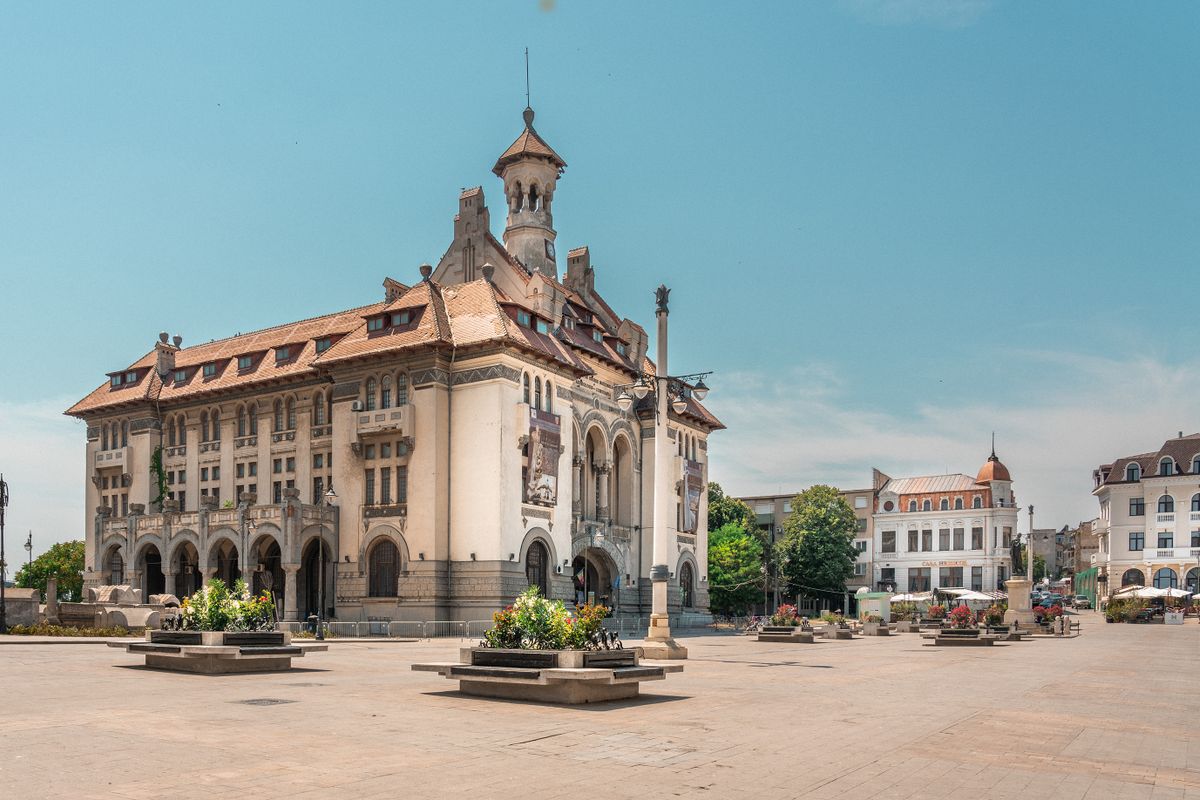
Romania’s technology ecosystem is no longer concentrated in a single city.
Bucharest remains the country’s largest software engineering market. As Romania’s financial and commercial centre, it attracts multinational technology companies, enterprise software providers, fintech organisations, and international consulting firms. Competition for experienced engineers remains strong, making Bucharest the country’s highest-paying market in many technical disciplines.
Cluj-Napoca has developed into one of Central Europe’s most dynamic technology hubs. Home to an extensive startup ecosystem and numerous global engineering centres, the city consistently attracts employers building cloud platforms, SaaS products, AI applications, and enterprise software. Salary levels closely rival those of Bucharest while maintaining a distinct culture centred on product innovation.
Iași continues benefiting from its strong academic foundations. Universities produce a steady pipeline of software engineers, supporting growth across outsourcing, enterprise technology, and product development. Companies recruiting in Iași often benefit from strong technical talent while facing slightly less competition than in larger markets.
Timișoara remains particularly strong in embedded software, automotive technology, industrial automation, and electronics engineering. Its long-standing manufacturing presence has encouraged close collaboration between software engineering and hardware development, creating a distinctive technical ecosystem.
Cities such as Brașov, Sibiu, Oradea, and Craiova are also becoming increasingly relevant. Remote work has allowed engineers to remain outside Bucharest while contributing to international organisations, encouraging employers to recruit across the country rather than focusing on a single metropolitan area.
The geography of Romanian software engineering has become significantly more balanced than it was a decade ago.
Programming languages rarely determine salaries on their own.
Business demand does.
Python remains one of Romania’s strongest-performing technologies because it sits at the intersection of artificial intelligence, data engineering, automation, and cloud computing. Engineers capable of deploying machine learning systems or building scalable data infrastructure continue attracting premium compensation.
Java remains indispensable across banking, enterprise software, telecommunications, and large-scale business applications. Despite being one of the industry’s most established technologies, demand for experienced Java engineers remains consistently high due to the complexity of enterprise systems.
Cloud engineering has become one of the market’s most valuable specialisations. Engineers with expertise in AWS, Microsoft Azure, Google Cloud Platform, Kubernetes, Terraform, and container orchestration frequently earn salaries well above market averages because they enable organisations to modernise infrastructure and scale applications efficiently.
Cybersecurity has experienced similar growth. As digital threats become more sophisticated, businesses increasingly invest in engineers capable of protecting cloud environments, applications, and enterprise networks.
Artificial intelligence represents perhaps the fastest-growing discipline. Companies across finance, healthcare, manufacturing, ecommerce, and software increasingly seek engineers capable of deploying AI rather than merely experimenting with it.
The common thread is clear.
Employers reward technologies that directly influence business competitiveness.
Romania has become increasingly attractive not because it is inexpensive, but because it is efficient.
International employers gain access to engineers with strong technical education, multilingual communication skills, European Union work compatibility, and experience collaborating with global product teams.
Many Romanian software engineers have spent years working within multinational organisations before moving into startups or remote-first companies. This experience reduces onboarding time while improving collaboration across distributed engineering teams.
Remote work has amplified this advantage.
An engineer based in Cluj or Iași can contribute to a London fintech, a Berlin SaaS platform, or a New York technology company without relocating. Geography has become less of a constraint, allowing Romanian professionals to participate in global engineering markets while remaining within a mature domestic technology ecosystem.
This international exposure continues pushing salary expectations upward, particularly among experienced engineers.
Romania’s technology market is entering a new phase.
The next decade is unlikely to be defined by rapid salary inflation across every engineering role. Instead, growth will become increasingly concentrated around specialist expertise.
Artificial intelligence, cloud infrastructure, platform engineering, cybersecurity, data engineering, and engineering leadership are expected to remain the fastest-growing disciplines.
Artificial intelligence will undoubtedly automate portions of software development itself. Code generation, testing, documentation, and debugging are already changing.
Yet these tools are shifting the role of software engineers rather than replacing it.
Businesses still need professionals capable of designing architectures, understanding trade-offs, leading engineering teams, securing systems, and translating business problems into technical solutions.
Those responsibilities continue commanding premium salaries.
Romania’s software engineering market has outgrown the outdated perception of being simply a lower-cost alternative to Western Europe. It has become one of Europe’s most capable technology ecosystems, supported by strong universities, multinational investment, a thriving startup culture, and engineers who increasingly operate on a global stage.
For software engineers, this means opportunity increasingly follows expertise rather than tenure. Continuous learning, technical depth, and business understanding will determine future earning potential far more than years of experience alone.
For employers, the lesson is equally clear. Competitive salaries remain important, but attracting exceptional engineers now requires more than compensation. Organisations must offer meaningful technical challenges, efficient hiring processes, flexible working models, and genuine opportunities for growth.
Romania’s competitive advantage has evolved from affordability to capability. As software engineering becomes more specialised and globally connected, that capability will remain the country’s greatest strength—and the primary reason international employers continue looking to Romania as one of Europe’s most important technology talent markets.