
If you want to hire in Romania successfully, the most important early decision is not the role or even the salary. It is the city. Romania is not a single talent market. It is a group of distinct local ecosystems with different talent pools, salary expectations, and competitive dynamics. The city you choose will shape […]
If you want to hire in Romania successfully, the most important early decision is not the role or even the salary. It is the city.
Romania is not a single talent market. It is a group of distinct local ecosystems with different talent pools, salary expectations, and competitive dynamics. The city you choose will shape who you can hire, how much you will pay, and how attractive your company appears to candidates.
Companies that hire in Romania effectively treat location as a strategic decision. Those that do not often struggle to attract the right people, even when the role itself is strong.
Get the city decision right and you’ll be fishing in a well-stocked pond. Get it wrong and you’ll spend years fighting the current, wondering why great candidates keep choosing someone else.
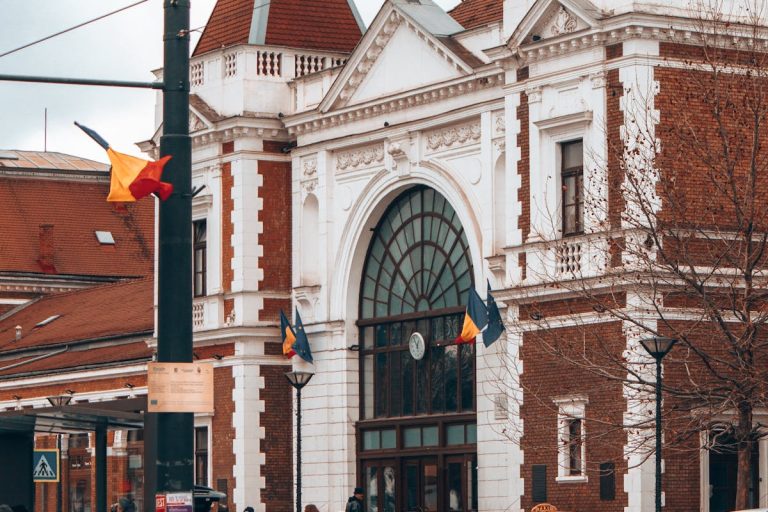
A common mistake made by international employers entering Romania is treating the country as a single homogeneous talent pool. In reality, professional labour markets in Romania are strongly city-based. With the partial exception of remote roles, candidates in Cluj-Napoca don’t freely move to Bucharest for opportunities, and vice versa. Professionals in Timișoara have their own career ecosystems, peer networks, and employer preferences.
This means that if you build your hiring strategy around “Romanian talent” as an abstraction, you’ll consistently underperform. The question isn’t just whether the talent exists in Romania. It’s whether it exists in meaningful numbers in the specific city where your role is based — and whether the city’s particular character makes it a natural home for the profile you need.
Each of the three main cities has a different competitive landscape for employers. Who you’re competing against for talent varies significantly depending on where you’re hiring. A tech role in Cluj-Napoca puts you in competition with a dense ecosystem of product companies, scale-ups, and well-funded local and international firms. A similar role in Timișoara places you in a somewhat less saturated field — which can be an advantage or a disadvantage depending on how you approach it.
Understanding the competitive environment before you start searching shapes everything from your compensation positioning to your outreach messaging to the speed at which you need to move once you find a strong candidate.
Bucharest is Romania’s capital and by far its largest city, home to roughly two million people and the clear centre of gravity for the country’s corporate and professional life. If you’re hiring in finance, legal, enterprise technology, shared services, FMCG, consulting, or any function that benefits from proximity to multinational headquarters operations, Bucharest is likely where you need to be.
The talent pool in Bucharest is large, diverse, and relatively sophisticated by Eastern European standards. You’ll find professionals with international exposure, multilingual capabilities, and experience navigating complex organisational structures. The city has a well-established corporate culture that makes it a natural home for senior professionals who want a full capital city life alongside career opportunity.
Infrastructure is strong. The two main international airports, Otopeni and Băneasa, connect Bucharest directly to most major European business hubs, which matters for roles that involve regular international travel or collaboration. The city’s business districts — Floreasca-Barbu Văcărescu, Pipera, and increasingly the central areas around Victoriei and Unirii — offer a range of modern commercial real estate options.
Bucharest is also the most competitive hiring environment in Romania by a significant margin. The city hosts Romanian operations for a large proportion of the multinationals active in the country. Amazon, Accenture, Deloitte, PwC, KPMG, ING, Société Générale, Orange, Vodafone, Enel, and dozens of others all have significant Bucharest presences and compete aggressively for senior talent.
This competition drives salaries up and makes passive candidate engagement harder. The best professionals in Bucharest are well-compensated, frequently approached, and accustomed to having choices. An employer who doesn’t show up with a compelling story, a competitive package, and a smooth process will find the market unforgiving.
Traffic and quality of life concerns also affect Bucharest in ways that influence candidate decisions. The city’s notoriously congested roads mean that commuting distance and the availability of hybrid or remote arrangements are real considerations in offer acceptance decisions — particularly for senior candidates who have enough leverage to make them non-negotiable.
Bucharest makes the most sense if you need a large team quickly, if your role benefits from proximity to major corporate operations, if you’re hiring into finance, legal, or shared services functions where Bucharest’s depth is a genuine advantage, or if your employer brand is strong enough to compete in the most crowded hiring environment in the country.
For niche senior hires, Bucharest’s scale is both an asset and a complexity. The candidates are there, but so is everyone else trying to reach them.

Cluj-Napoca — almost universally referred to simply as Cluj — is Romania’s second city and, by the assessment of most people working in technology and innovation, its most exciting one. With a population of around four hundred thousand, it is a fraction of Bucharest’s size. But in terms of tech talent density, startup energy, and the concentration of product-oriented companies, it operates at a level that significantly exceeds what its size would suggest.
The Technical University of Cluj-Napoca and Babeș-Bolyai University together produce a steady stream of engineering and computer science graduates each year. The city has cultivated a startup and scale-up ecosystem that has become one of the most vibrant in Central and Eastern Europe, producing companies like UiPath (whose founders have Cluj connections), Flowx.ai, and many others. International technology companies — including major players in software development, cybersecurity, and data — have established development centres in Cluj specifically to tap this ecosystem.
The professional culture in Cluj has a character of its own. It tends toward the entrepreneurial and the meritocratic. Professionals here are often highly motivated, outcomes-oriented, and sophisticated in their expectations around work culture. They tend to be less formal than Bucharest professionals, more comfortable with flat hierarchies, and more likely to be motivated by the nature of the work itself rather than purely by compensation or prestige.
Cluj is small. That’s the most straightforward challenge. The talent pool that makes it exceptional for tech is also finite, and the number of employers competing for that talent has grown substantially as the city’s reputation has spread internationally. Senior engineers, tech leads, and product managers with strong track records are highly sought after and have the leverage to be selective.
Cluj’s popularity has also had a pronounced effect on salaries. Compensation expectations in Cluj-Napoca for technology roles have converged significantly with Bucharest levels — and in some specialisations, Cluj professionals command a premium that surprises employers who expect a secondary city to be a budget option. It isn’t.
Infrastructure, while improving, is still catching up with the city’s growth. The airport has expanded significantly but doesn’t match Bucharest’s international connectivity, which matters for roles involving frequent travel. Housing costs in Cluj have risen sharply over the past decade, which affects both relocation conversations and quality of life considerations for candidates.
Cluj is the right city if you’re building a technology or product team and want to operate in a dense, energetic ecosystem of technically strong professionals with a startup mentality. It’s also strong for digital agencies, R&D functions, and any role where you want candidates who are intrinsically motivated by the quality of what they’re building.
If you want to position as an employer of choice for serious engineers, Cluj is where that reputation is built and tested. But you need to come with a compelling technical challenge, a genuine culture of autonomy and quality, and compensation that reflects what the market actually pays — not what you hoped a secondary city would cost.
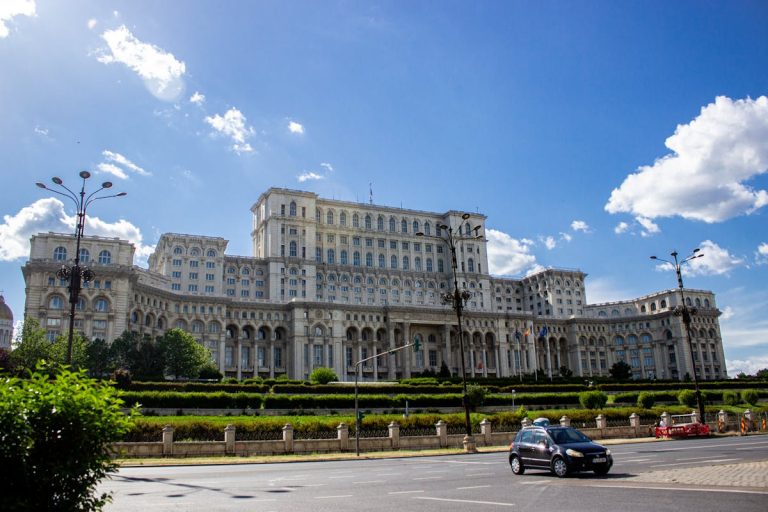
Timișoara is Romania’s third major hiring hub and arguably its most underrated. Situated in the west of the country, close to the Hungarian and Serbian borders, it is a city of around three hundred thousand with deep historical ties to Central Europe and a cultural identity that feels distinct from both Bucharest and Cluj.
Timișoara has long been a stronghold for manufacturing, engineering, and automotive-related industry. Continental, Bosch, Hella, and numerous other major European industrial and automotive groups have operations in and around the city, making it one of the strongest markets in Romania for technical engineering roles, production management, supply chain, and manufacturing leadership.
The city is also home to the Polytechnic University of Timișoara, which produces strong engineering graduates, and a growing technology sector that has benefited from Timișoara’s connectivity to Western Europe. German and Hungarian language proficiency is notably higher in Timișoara than in other Romanian cities, a function of geography and history that makes the city particularly attractive for German-speaking multinationals seeking bilingual talent.
The competitive intensity for talent in Timișoara is somewhat lower than in Bucharest or Cluj — which translates, for a well-positioned employer, into the ability to move faster, pay somewhat less at the margin, and build a recognisable employer brand more quickly. It is a market where a well-run search can yield strong results without fighting through the same level of competition as the larger cities.
Timișoara’s tech ecosystem is growing but not yet comparable in depth or density to Cluj’s. If you’re looking for product engineers, data scientists, or software architects with strong startup-calibre experience, the pool is smaller and you may need to work harder to find the specific profile you need.
The city also has a narrower professional ecosystem in some functions — marketing leadership, for example, or senior finance with international IFRS exposure — which can make headhunting for those profiles a more intensive exercise. For highly specialised roles, Timișoara may require either a willingness to consider remote or hybrid arrangements that allow you to draw from a wider geography, or a longer search timeline.
Timișoara is the right city if your business has a meaningful connection to manufacturing, engineering, automotive, or industrial processes. It’s also strong if German language capability is important to your operation, if you want to compete in a slightly less saturated talent market than Bucharest or Cluj, or if your employer brand has appeal to professionals who prefer a high quality of life without the scale and intensity of a major capital.
For foreign SMEs entering Romania and looking to build a base without immediately absorbing the full competitive heat of Bucharest or Cluj, Timișoara deserves serious consideration as a strategic entry point.

The Bucharest-Cluj-Timișoara framework covers the primary hiring hubs, but it doesn’t exhaust the map. Two other cities are worth noting for specific contexts.
Iași, in the northeast, has a large student population drawn by its four universities and a growing technology and outsourcing sector. Salaries are lower than the three main hubs, which makes it attractive for cost-sensitive scaling. The talent pool at the junior-to-mid level is solid, though the senior and specialist layer is thinner.
Brașov, in the centre of the country, is smaller still but has a meaningful presence in manufacturing, tourism-related industries, and a growing professional services sector. For companies with operations in the Transylvania region or looking for a lower-cost alternative to Cluj with reasonable connectivity, Brașov merits attention.
Neither city is a primary destination for senior professional headhunting, but for volume hiring or entry-level to mid-management roles, they represent real options that shouldn’t be dismissed simply because they don’t appear in most general guides.
Rather than prescribing a single answer, here is a set of questions that should guide your decision.
The first question is about your function. Technology and product roles are best served in Cluj, with Bucharest as a secondary option. Finance, legal, and shared services point strongly to Bucharest. Manufacturing, engineering, and automotive functions belong in Timișoara. If your function sits across multiple categories, the answer may be to split your team or to use remote and hybrid arrangements to access talent from multiple cities simultaneously.
The second question is about your competitive appetite. If you’re willing and able to compete hard for talent in a dense market, Bucharest or Cluj give you the largest pool. If you’d rather be a more visible and attractive employer in a slightly less contested environment, Timișoar